
Recycling metals is an important part of creating a more sustainable approach to waste and resource management. Metals can often be recycled and reused many times, meaning valuable materials can be kept in circulation rather than being discarded after a single use. But why is metal recycling so important for sustainability, and what difference can recycling your scrap metal actually make?
It reduces the need for new raw materials
One of the biggest benefits of recycling metals is that it reduces the need to extract as many new raw materials from the earth. Mining and processing metal requires natural resources, energy and infrastructure. By recovering metal that has already been produced, recycling allows manufacturers to use existing materials rather than relying entirely on newly extracted resources.
This is particularly important for metals such as copper and aluminium, which are widely used across construction, manufacturing, electrical equipment and many other industries.
Recycling helps reduce waste
Unwanted metal does not necessarily need to become waste. Old radiators, pipework, fencing, machinery, cable, steelwork and other metal items can often be recovered and processed for recycling. Instead of taking up space in landfill or being disposed of with general rubbish, these materials can be returned to the recycling system.
For homeowners, tradespeople and businesses, separating scrap metal from other waste can therefore be a simple way to make clearances, renovations and building projects more sustainable.
Metals can be recycled repeatedly
Another important reason metal recycling supports sustainability is that many metals can be recycled repeatedly without losing their fundamental properties. This means that the metal from an old product can become part of a new product rather than being permanently lost.
For example, scrap steel can be processed and used in the production of new steel products, while recycled aluminium and copper can also be used again in a wide range of applications.
It can reduce the environmental impact of metal production
Producing metal from recycled material can, depending on the metal and recycling process, require less energy than producing it from newly extracted raw materials.
This is one reason why recycling is an important part of improving resource efficiency. The more suitable material that can be recovered and reused, the less reliance there may be on extracting and processing additional raw materials.
It supports a more circular economy
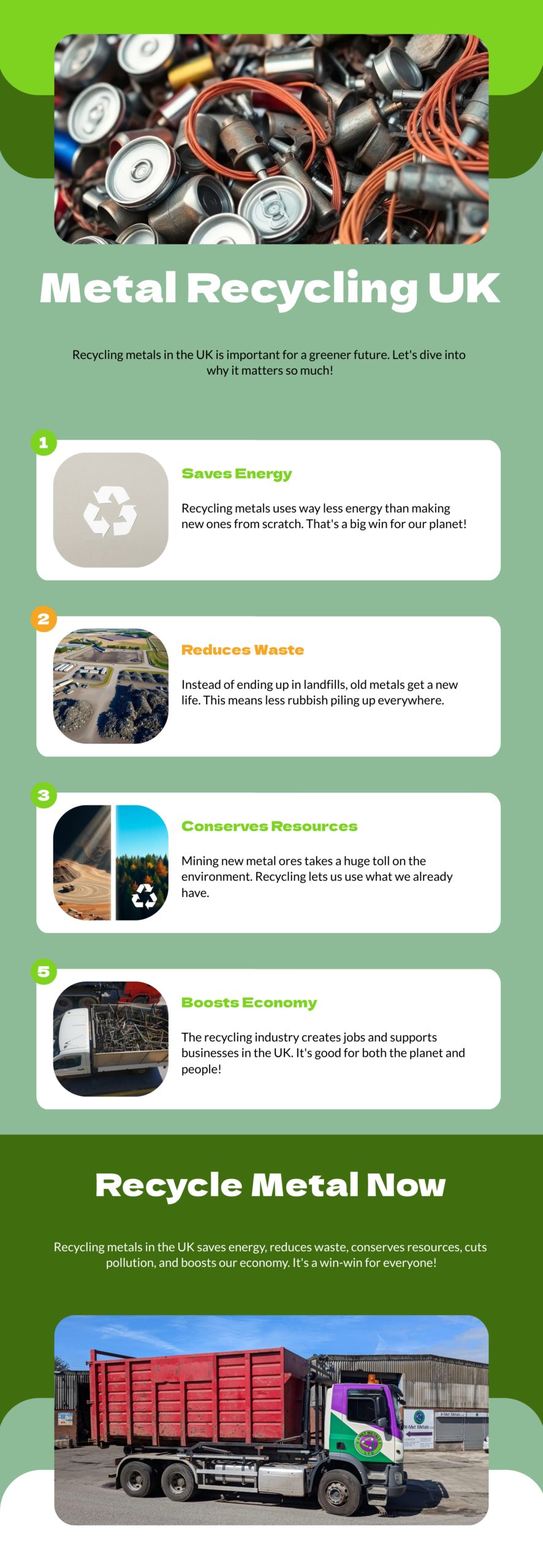
Metal recycling also contributes to the idea of a circular economy. Rather than treating products as disposable, a circular approach aims to keep materials and resources in use for as long as possible. When a metal item reaches the end of its useful life, recycling gives the material an opportunity to become a resource for something else.
This can be particularly valuable in industries such as construction and manufacturing, where large quantities of metal are used.
What metals can be recycled?
A wide range of ferrous and non-ferrous metals can be recycled, including:
* Steel
* Stainless steel
* Iron
* Aluminium
* Copper
* Brass
* Lead
* Zinc
* Cable and wiring
* Metal pipework
* Machinery and equipment
Different metals have different characteristics and values, so they are normally sorted during the recycling process. If you’re unsure whether something can be recycled, a scrap metal merchant can assess the material and advise you on the most appropriate way to handle it.
How can you make your scrap metal recycling more sustainable?
If you’re carrying out a property clearance, renovation, construction project or industrial job, there are several simple ways to make sure your unwanted metal is recovered.
Separate metal from general waste
Where practical, keep scrap metal separate from other rubbish. This makes it easier to identify recyclable materials and prevents useful metal from becoming mixed with general waste.
Take your scrap to a licensed scrap yard
For smaller quantities, taking your unwanted metal to a licensed scrap yard can be a straightforward way to ensure it enters the recycling process.
Arrange scrap metal collection
For larger or heavier quantities, a scrap metal collection can save you the effort of transporting the material yourself. Scrap can be collected from your chosen location, including homes, businesses, construction sites and industrial premises.
Use a scrap metal skip
If you’re generating metal throughout a larger project, scrap metal skip hire can provide a convenient way to collect it as you work. This keeps the site more organised while allowing recyclable metal to be separated from other waste.
Can recycling scrap metal also save money?
Sustainability isn’t the only potential benefit of recycling scrap metal. Depending on the material, quantity and current scrap prices, unwanted metal may also have a monetary value.
Instead of paying to dispose of metal as general waste, you may be able to sell suitable scrap to a scrap metal merchant. This makes recycling a practical option as well as an environmentally responsible one.
For more information about scrap metal recycling, get in touch with our experienced team today here at X-Met Metals. We offer competitive weigh and pay services, convenient scrap metal collection from your chosen location, scrap metal skip hire for larger projects, and fully licensed scrap yards where you can recycle a wide range of ferrous and non-ferrous metals. In fact, for scrap metal recycling across the North West, from Chorley to St Helens and Blackburn to Skelmersdale, we are the team you can count on. Whether you’re clearing a home, managing a construction site or disposing of industrial scrap, our experienced team is here to help you recycle your metal quickly, safely and responsibly.